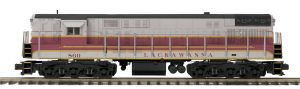
O FM Trainmaster Diesel Lackawanna/Dmy.
Fairbanks Morse got into the locomotive business because it
made submarine engines. FM’s unique opposed-piston diesel engine
powered about half the U.S. Navy’s World War II submarine fleet and
developed a great reputation for reliability; the adaptation to
railroad equipment during and after the war seemed like a natural
transition.
In the opposed-piston motor, each cylinder had a piston at
either end and the combustion chamber in the middle. There were no
valves or cylinder heads. Intake and exhaust occurred through holes in
the cylinder walls. The upper and lower banks of pistons each powered a
separate crankshaft, and the two crankshafts were linked together to
power the locomotive. While this sounds like a complex way to build an
engine, the O.P. diesel in fact had several advantages over a
conventional motor: less moving parts, terrific acceleration, and about
double the horsepower per cylinder.
In 1953 the O.P. engine reached its zenith in the
Trainmaster. Introduced at the Railroad Manufacturers’ Supply
Association show that year, FM’s new locomotive took the show by storm.
It was the most powerful single-motored diesel locomotive of its era
and had a brawny body to match its bold name. Emblazoned in bright
yellow and red, four Trainmaster demonstrators barnstormed the country
and walked away with any consist the railroads threw at them. For one
brief moment, Fairbanks Morse looked like a contender.
Ultimately, however, the opposed-piston engine proved
ill-suited to locomotive use. The bone-jarring railroad environment was
much rougher on the motor than a submarine cushioned by an ocean. The
top crankshaft proved prone to oil leakage. Perhaps most important,
maintenance was a nightmare. Whereas a single bad cylinder in an
Electro-Motive diesel could be accessed by pulling off one cylinder
head, a cylinder repair in an O.P. engine required removal of the top
crankshaft and removal or disconnection of the entire top bank of
cylinders – which also meant the roof of the locomotive had to come
off. Ultimately, only 127 Trainmasters were sold to 11 U.S. and
Canadian railroads.
In the world of O gauge railroading, however, the Trainmaster
was a hit from the moment it went on the market in the mid-1950’s. The
engine’s massive size and tremendous pulling power have made it one of
the most-loved engines among 3-rail operators for nearly half a
century. The 2011 Premier Trainmaster has been created from all new
tooling and comes complete with the digital sound, amazing slow speed
capability, and variable smoke output that make Proto-Sound 2.0 the
best sound and control system in model railroading. Unlike past
iterations of the Trainmaster from other model railroad companies, our
model’s tooling was designed to allow us to customize the model
according to each railroad’s prototype. In short, this will be the most
accurate Trainmaster ever constructed for the O Gauge
marketplace.
Sides, Pilots and Fuel Tank
Featured Products

Goliath Raceway
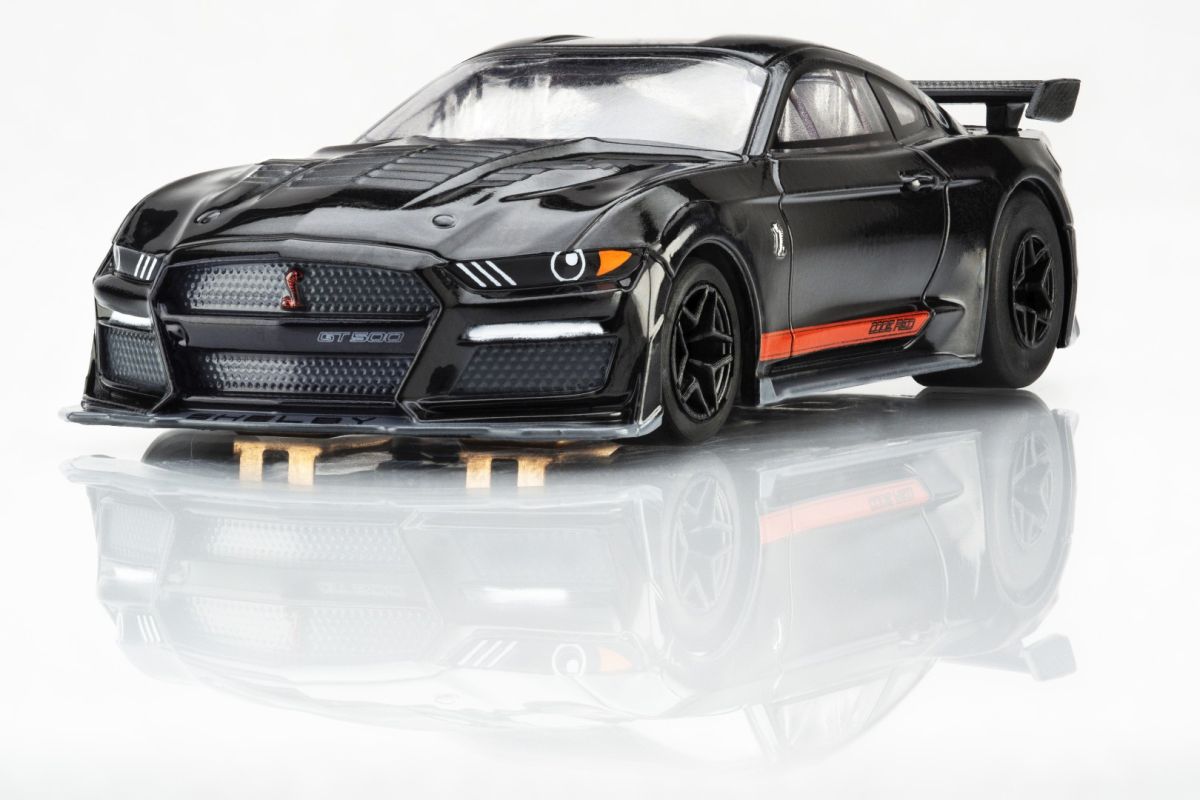
Shellby Mustang GT500 Code Red 2022

TARIFF 1953 Ford Pickup Baja Patrol Skill 2
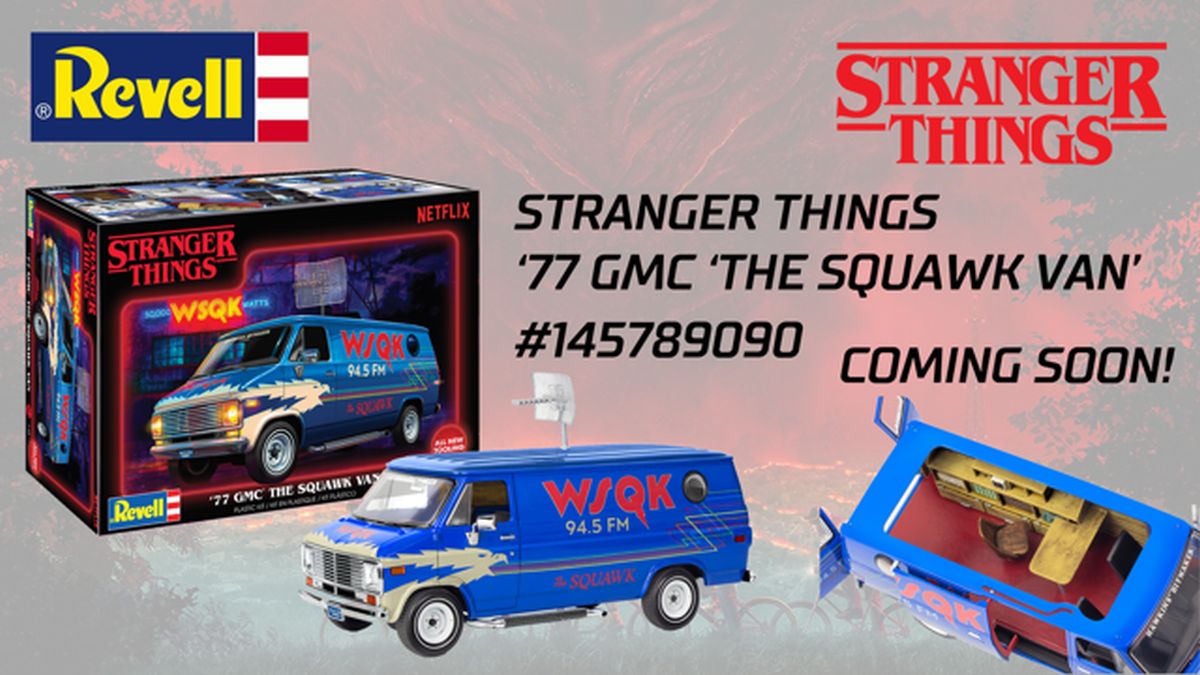
77 Gmc The Squawk Van – Stranger Things Skill 3
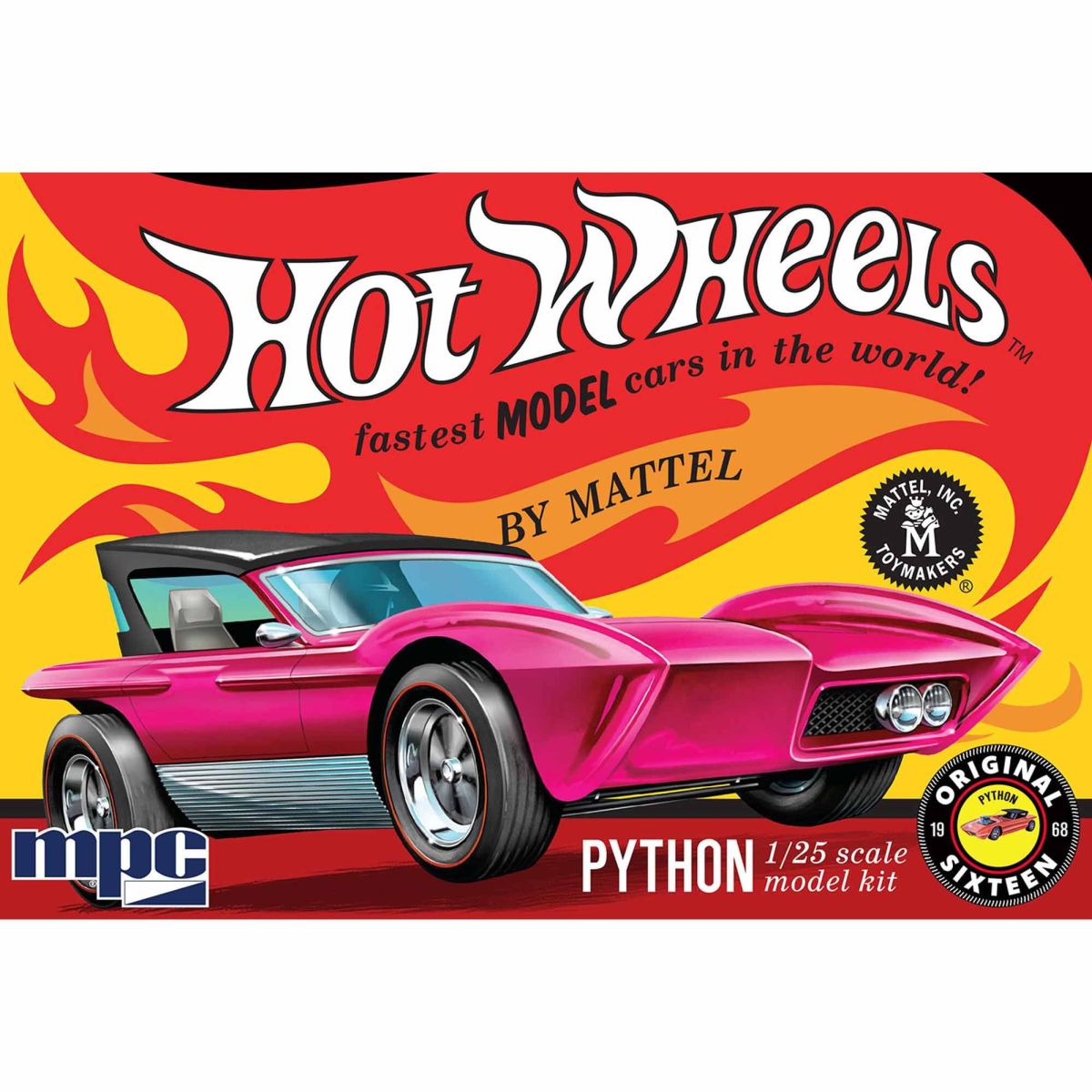
TARIFF Hot Wheels Python Skill 2
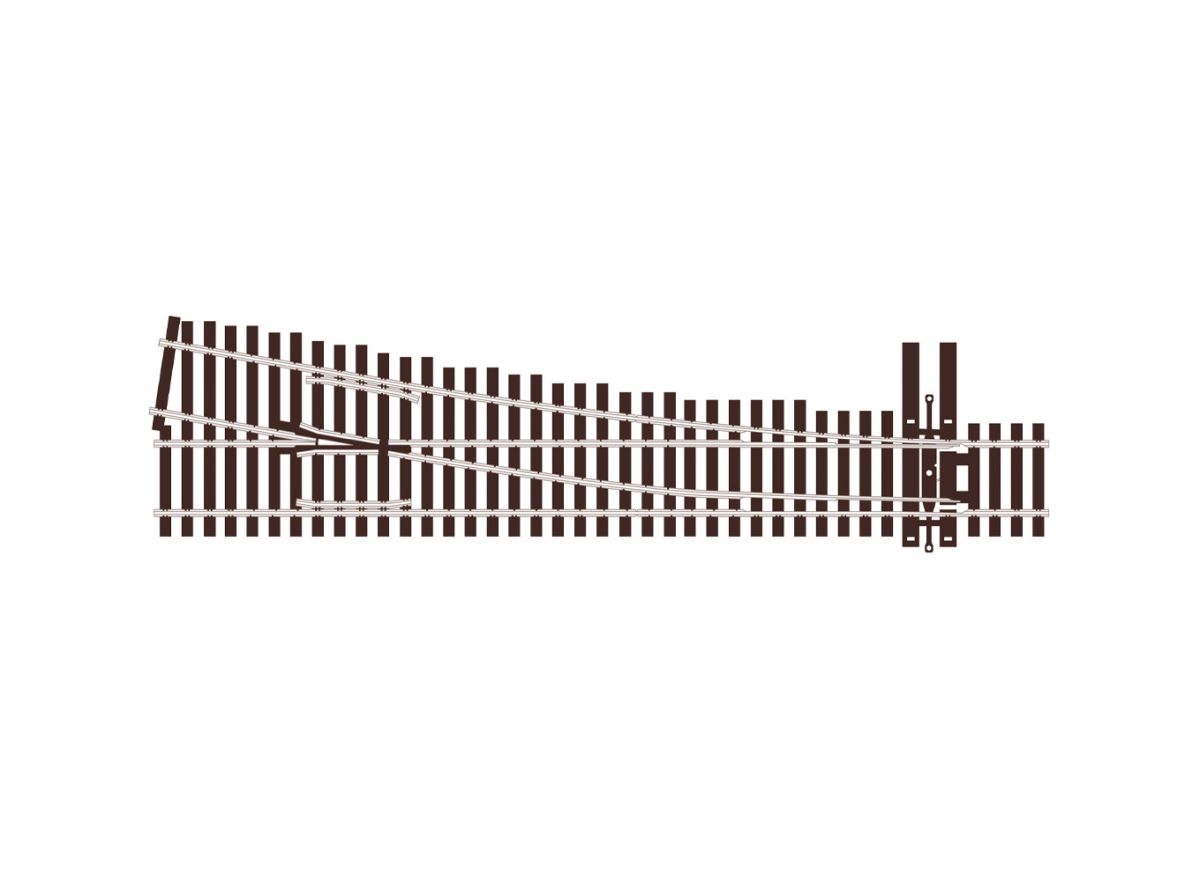
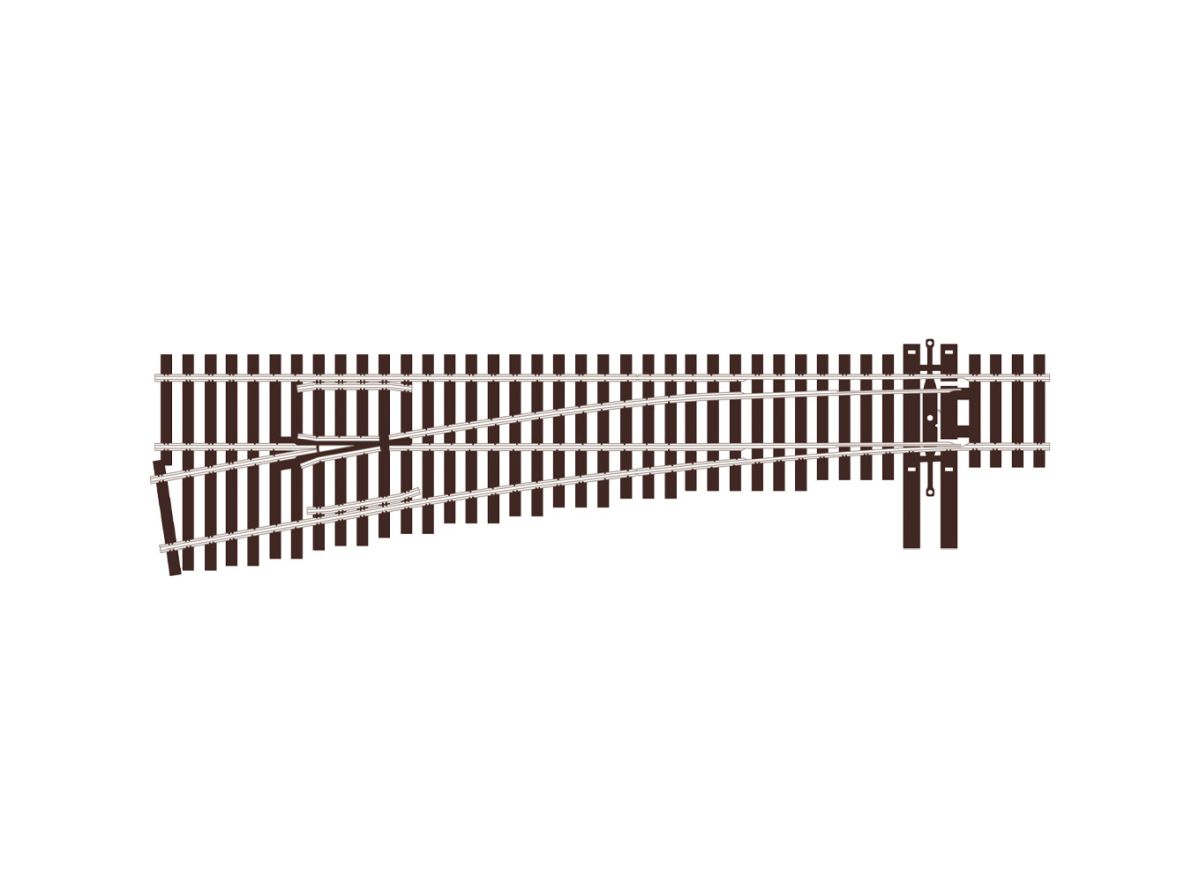
HO Code 83 #6 Turnout RH – UNI
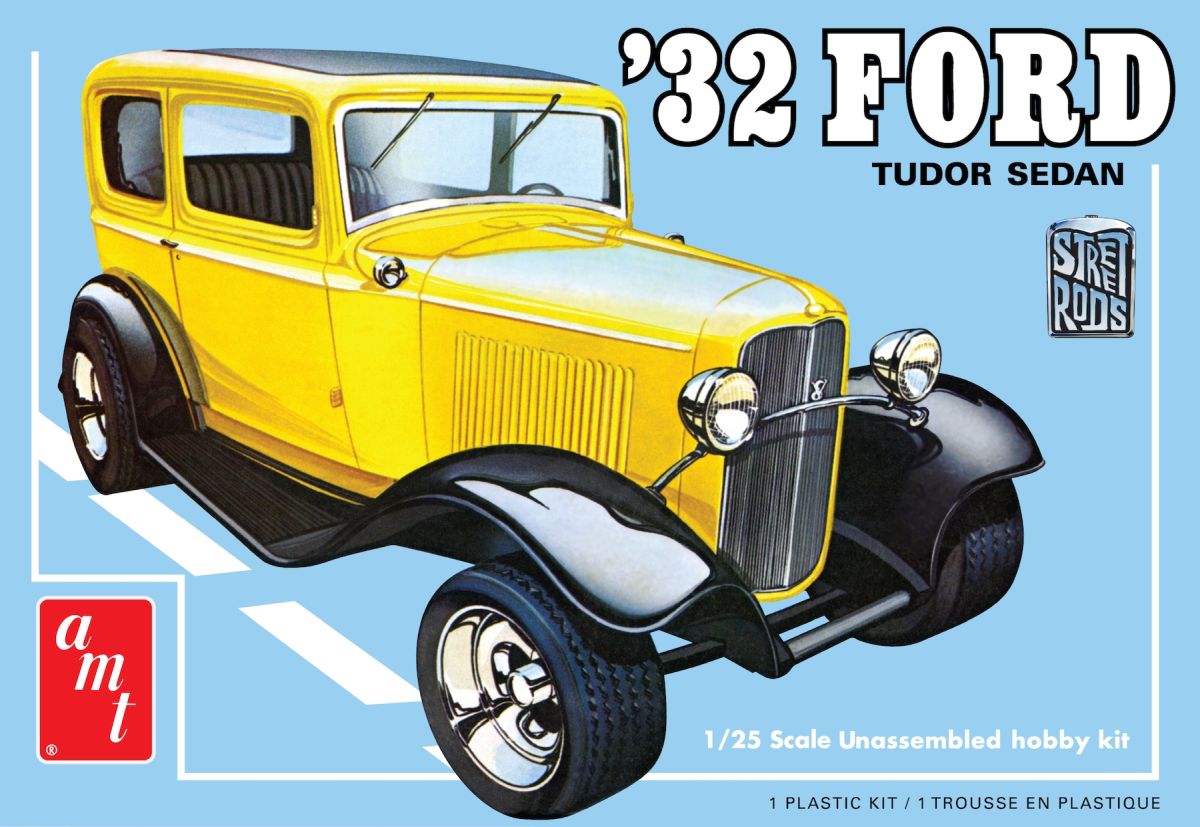
HO Code 83 #6 Turnout LH – UNI
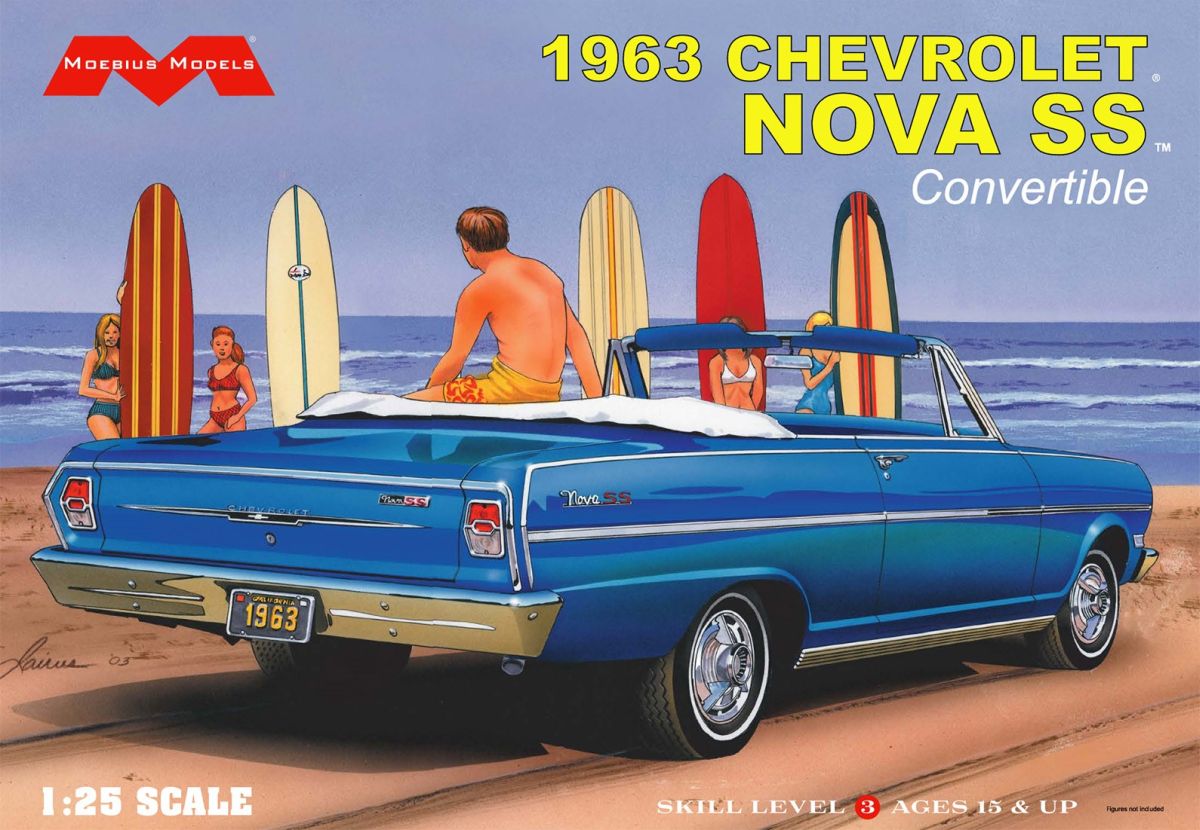
TARIFF 1932 Ford Sedan Street Rods Series Skill 2
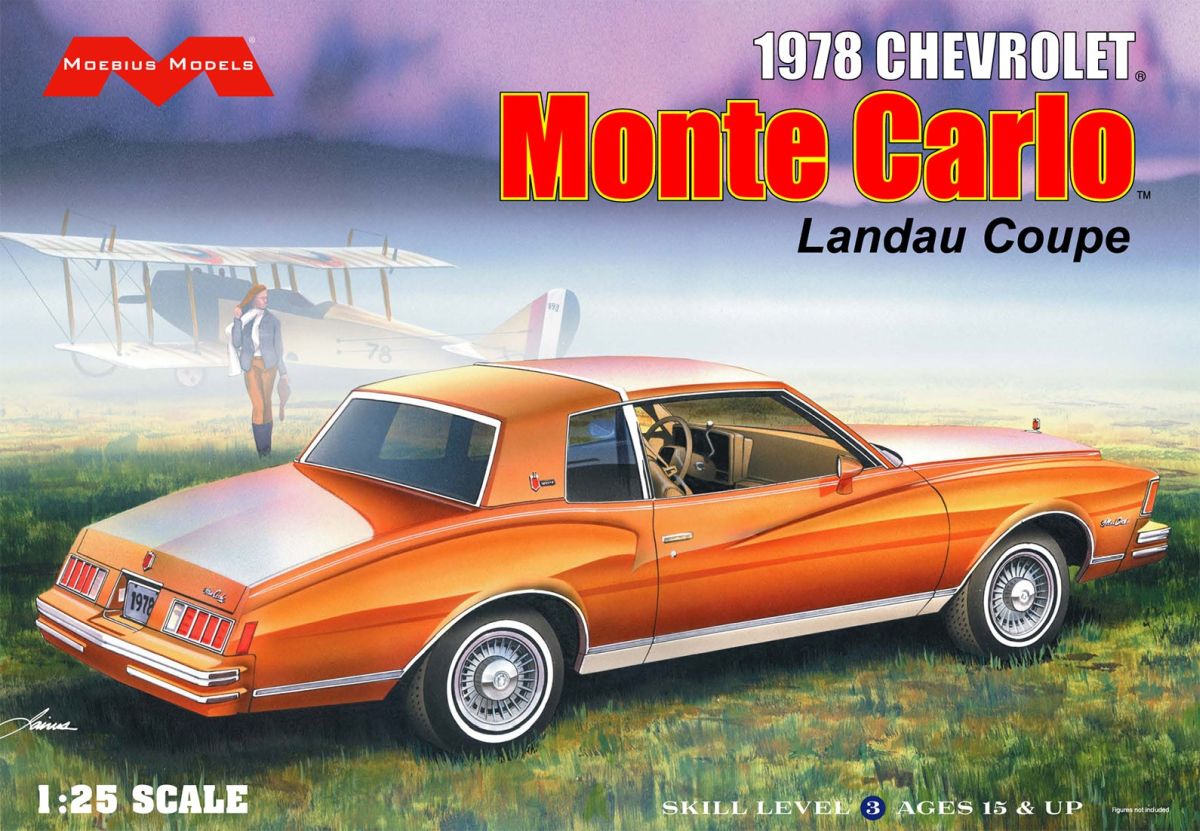
1963 Chevrolet Nova SS Convertible
1978 Chevrolet Monte Carlo Landau Coupe
K-46 Astron Strike Skill ADV